The Case for CO₂ Heat Pumps
At BARC Architecture, we like to geek out on mechanical systems. When an exciting, highly efficient technology emerges that is not yet widely adopted in the US, we do everything we can to spread the word. To understand why we are so passionate about this, consider that roughly 46% of a typical American home's energy use is dedicated solely to space heating and domestic hot water. This represents a massive opportunity to take a profound chunk out of a building's total energy footprint and drive it entirely with clean, renewable power generated right on the roof. At its core, a heat pump is a marvel of thermodynamics. Rather than expending massive amounts of energy to create heat—like a traditional gas furnace or electric resistance coil—a heat pump simply moves heat from one place to another. By extracting ambient thermal energy from the outside air and compressing it, these systems routinely achieve efficiencies exceeding 300%. However, as California mandates the transition toward residential electrification, not all heat pumps are created equal. The key to true sustainability and high-temperature performance lies in the refrigerant running through the system's veins.
For decades, the industry standard has been synthetic hydrofluorocarbons (HFCs), such as R-410A. While effective at transferring heat, these synthetic chemicals are potent greenhouse gases. If a standard system leaks, the environmental impact is devastating—R-410A has a Global Warming Potential (GWP) of over 2,000, meaning it traps two thousand times more heat in the atmosphere than carbon dioxide. In response, cutting-edge architectural engineering is turning to a brilliant, natural alternative: pure CO₂ (R-744), which holds a baseline GWP of exactly 1.
The High-Temperature Efficiency Illusion
Beyond its environmental purity, CO₂ solves a critical performance flaw inherent in standard American heat pumps. The marketed "efficiency rating" of a traditional synthetic-refrigerant heat pump can be highly misleading. While these standard units are incredibly efficient at heating water to 90°F for basic space heating, their efficiency plummets drastically when tasked with producing the 120°F+ temperatures required for domestic hot water.
CO₂, however, operates on a unique thermodynamic curve known as a transcritical cycle. Because of its specific operating pressures and continuous temperature glide, a CO₂ system is exceptionally efficient at taking cold incoming water and lifting it to extreme temperatures—often exceeding 150°F in a single pass—even when pulling heat from chilly coastal fog or low winter temperatures. This makes CO₂ the absolute ideal refrigerant for domestic hot water generation.
The Monobloc Advantage & The US Market Reality
In a traditional American split-system heat pump, the compressor sits outside while the heat exchanger sits inside, requiring a technician to run long, pressurized copper lines filled with synthetic refrigerant right through the walls of your home.
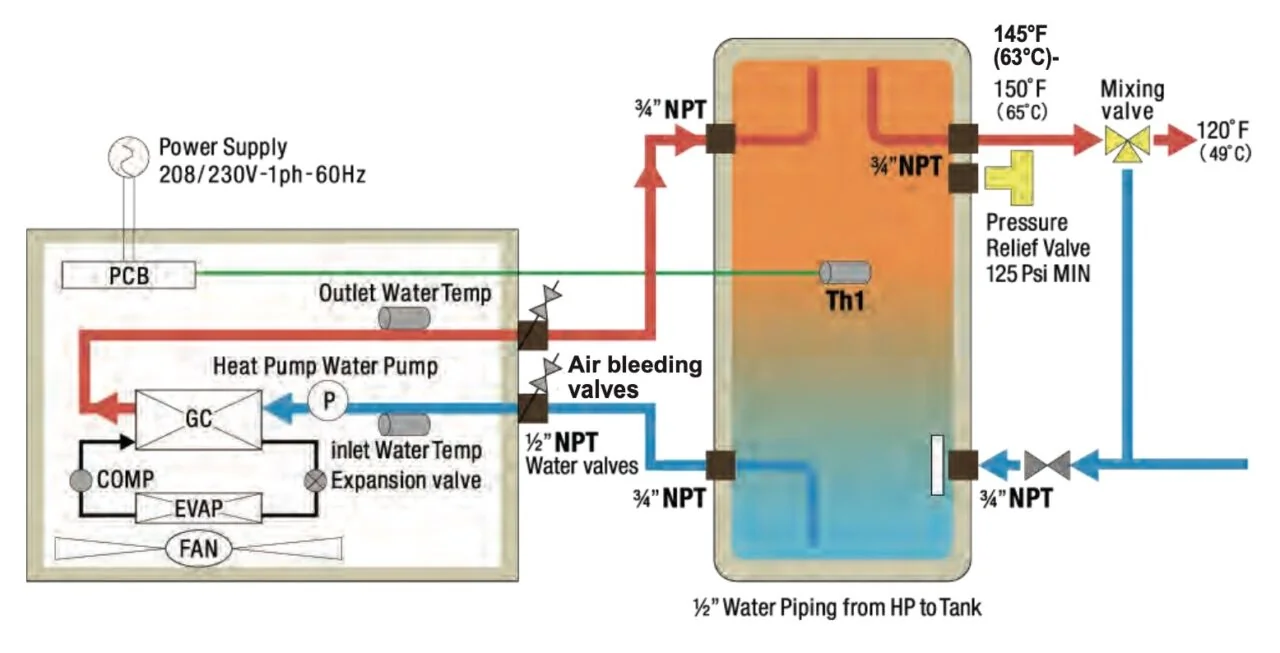
A "monobloc" system eliminates this entirely. The entire refrigeration cycle—including the CO₂—is securely factory-sealed within a single unit located entirely outside the home. The only thing that crosses the threshold into the house is clean, pure water. This makes the system exceptionally safe, significantly faster to install, and entirely removes the risk of refrigerant leaking into the living space.
Despite these incredible architectural and mechanical advantages, the United States market remains significantly behind Europe. While European architects and builders have had access to a wide array of sophisticated CO₂ monobloc systems for years, engineering a comprehensive CO₂ hydronic setup in California currently requires a highly technical, piecemeal approach—carefully integrating the heat pump, thermal buffer tanks, and controllers from different specialized manufacturers.
To understand the stark disparity between markets, consider that as of this writing, there is exactly one residential CO₂ air-to-water heat pump widely available in the United States—and it is strictly marketed and sold as a standalone water heater. Unfortunately, it is only offered in a single capacity. While perfect for domestic hot water, using it to drive a whole-home hydronic heating system typically falls short of the BTU load required for the average American house. To meet that demand, architects and engineers are forced to install the units in pairs. This workaround not only increases the equipment cost but, under current manufacturer guidelines, often eliminates the warranty.
Interestingly, this capacity limitation has driven a unique engineering workaround in the commercial sector. For large multifamily buildings, engineers are currently chaining together ten or more of these single-capacity condenser units to meet massive domestic hot water loads. While the cost per BTU would theoretically drop if manufacturers simply offered larger commercial-scale units, this chained approach inadvertently provides a massive benefit: unparalleled system redundancy. If a single unit requires maintenance or fails, the rest of the array continues to operate seamlessly, ensuring the building never loses hot water.
Despite the immediate hurdles and warranty frustrations in the single-family residential market, we remain incredibly hopeful. As domestic demand for true net-positive electrification surges, we anticipate the US market will rapidly catch up, offering the varied capacities and unified, plug-and-play systems currently enjoyed overseas.
Hydronic Synergy & The Thermal Battery
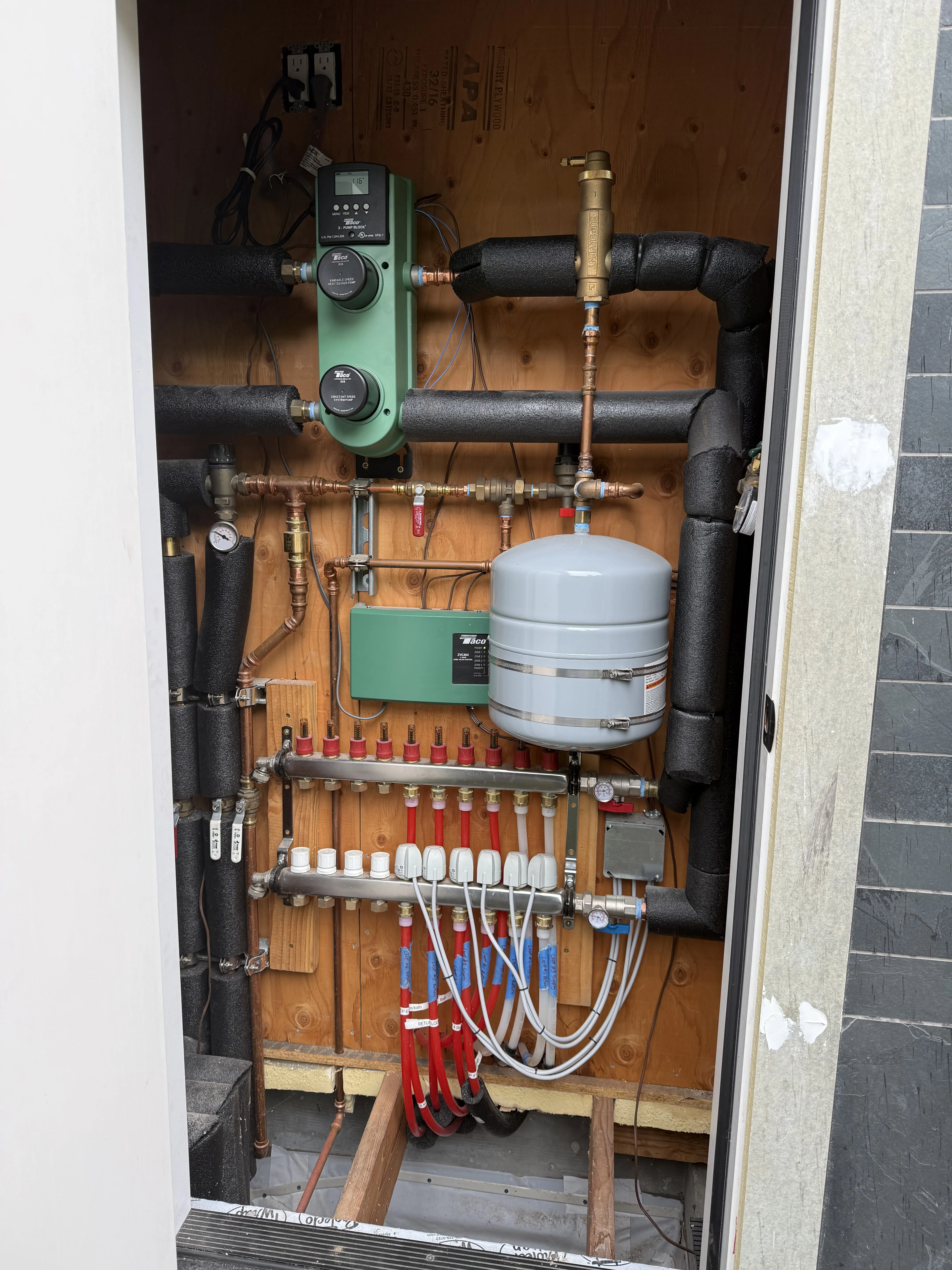
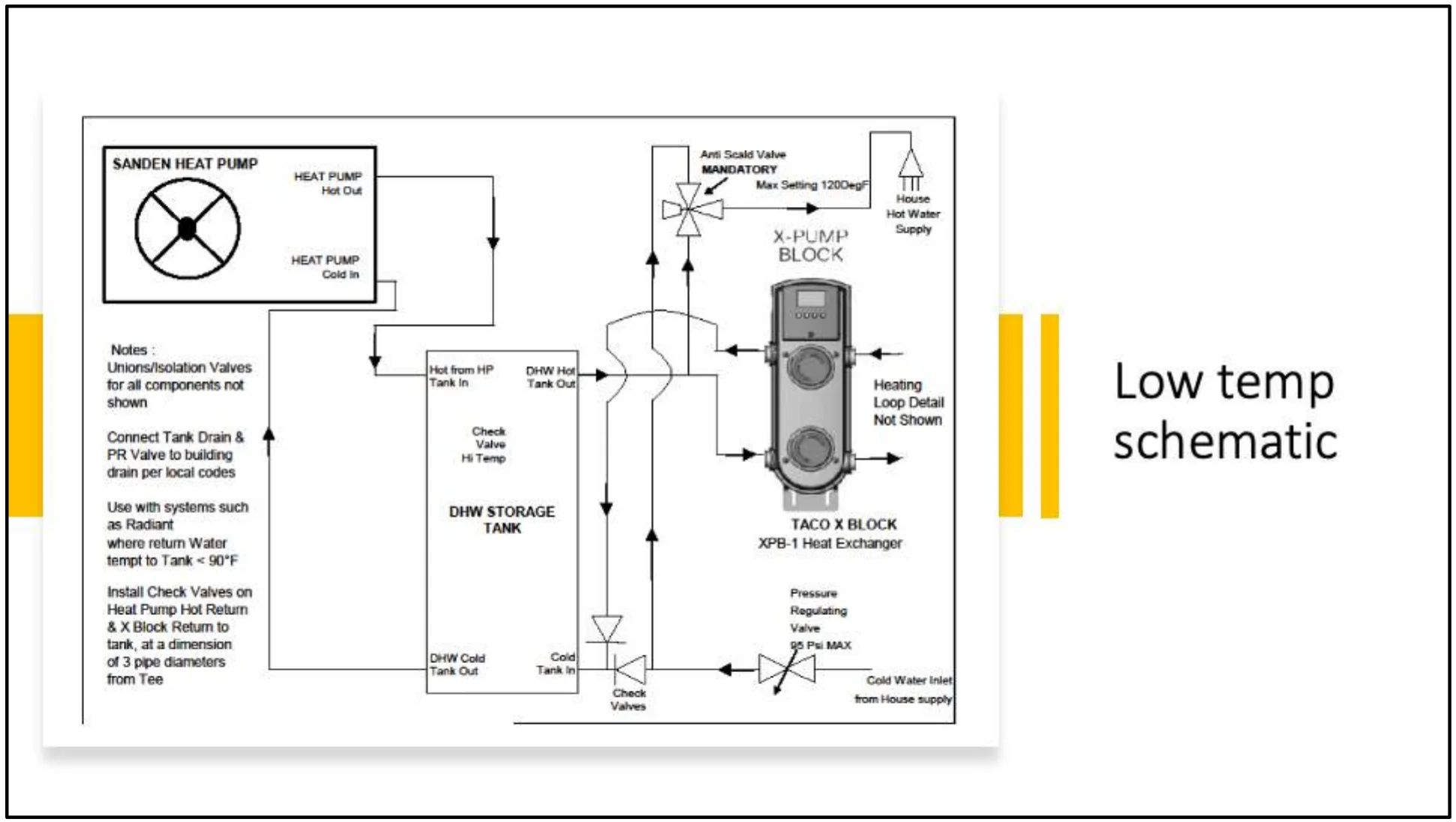
When properly engineered, a CO₂ heat pump serves as the engine for a holistic, whole-home "combi" system. Rather than using the heat pump solely for domestic hot water, the 150°F water it generates is directed into a highly insulated, stratified storage tank inside the home.
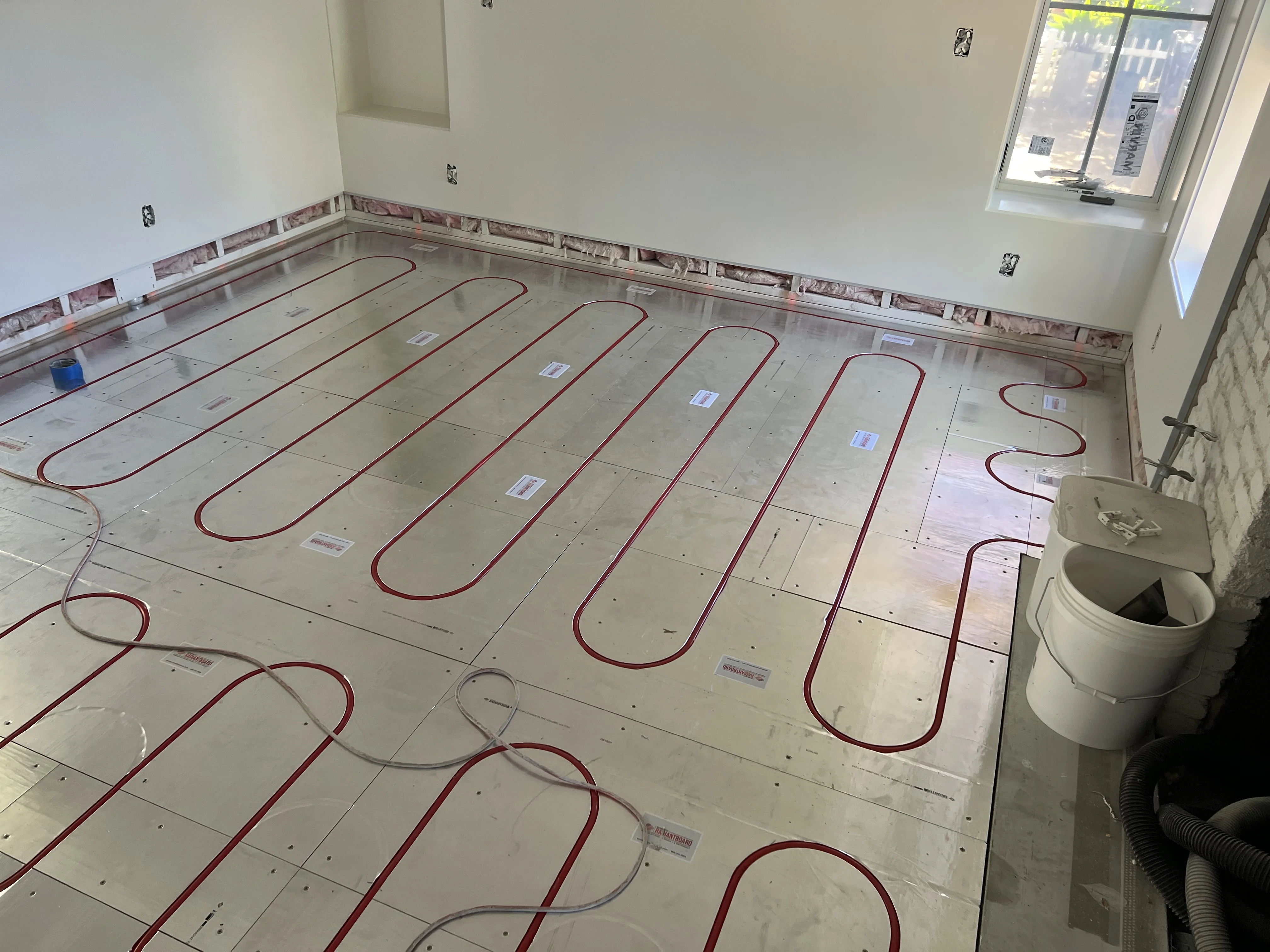
This stratified tank acts as a massive thermal battery. The extreme heat at the very top of the tank is drawn off for domestic uses like showers and sinks. However, to utilize this stored thermal energy for space heating, the 150°F water cannot be sent directly into the floors. Instead, it is directed through a specialized heat exchanger—such as the Taco X-Pump Block (XPB). This critical component safely transfers and tempers the extreme heat down to the precise, much lower temperatures required for a separate closed hydronic radiant floor loop. This provides silent, draft-free, and incredibly comfortable space heating without ever mixing the domestic drinking water with the radiant heating fluid.
At BARC Architecture, we treat this complex mechanical integration as a fundamental driver of sustainable design. We have successfully engineered and deployed this exact CO₂ combi-system strategy in high-performance residential projects like the Sun House and our Pleasure Point Compound. By intentionally pairing advanced CO₂ generation with intelligent hydronic storage, we create homes that are not only deeply comfortable but operate as highly resilient, net-positive ecosystems.