The Cost of Sustainability
The architectural industry often shies away from a simple, unavoidable truth: building a genuinely sustainable, high-performance building costs more upfront. In an era dominated by budget optimization and rapid construction schedules, acknowledging the premium of green building can feel like a risk. However, at BARC Architecture, we believe that avoiding this conversation does a disservice to our clients. True sustainability is not a marketing buzzword; it is a long-term financial strategy. The initial investment in a high-performance envelope, renewable resources, and advanced energy systems is rapidly offset by the elimination of exorbitant monthly utility bills and future maintenance burdens.
Why "Code Minimum" is Expensive
It is a common misconception that meeting the local building code means constructing a "good" building. In reality, building to standard code minimums means you are legally building the worst performing structure allowed by law. Code sets the baseline for life safety, not for energy efficiency, comfort, or longevity. When initial construction costs are aggressively minimized, the financial burden is simply transferred to the building's operational lifecycle.
The hidden, long-term costs of cheap construction compound quickly. Standard fiberglass insulation and leaky timber framing lead to drafty rooms and astronomical heating and cooling bills. Low-grade exterior materials succumb to coastal weather, resulting in material rot that requires complete replacement within fifteen to twenty years. Ultimately, a "cheap" building is incredibly expensive to own and maintain.
Embodied Carbon & Renewable Resources
While operational energy (the power used for heating, cooling, and lighting) dominates the mainstream sustainability conversation, true ecological stewardship requires a rigorous accounting of embodied carbon. This refers to the total greenhouse gas emissions generated by extracting, manufacturing, transporting, and assembling building materials.
To mitigate this massive initial footprint, our studio prioritizes the integration of rapidly renewable resources—such as FSC-certified timber—and highly recyclable, monolithic materials. However, managing carbon goes beyond material selection; it is rooted in a fundamental architectural philosophy: the most sustainable building is the one that is designed to last. A cheaply built structure that requires a full remodel or demolition in thirty years effectively doubles its embodied carbon. By engineering structures with inherent flexibility and utilizing 100-year materials, we amortize that initial carbon debt over generations.

The Economics of Material Longevity
In coastal regions like Santa Cruz and the Monterey Peninsula, the environment is relentlessly harsh. The combination of corrosive salt air, high winds, and intense UV exposure degrades standard building materials at an accelerated rate. Building to last means specifying an envelope that does not need to be constantly repaired or replaced.
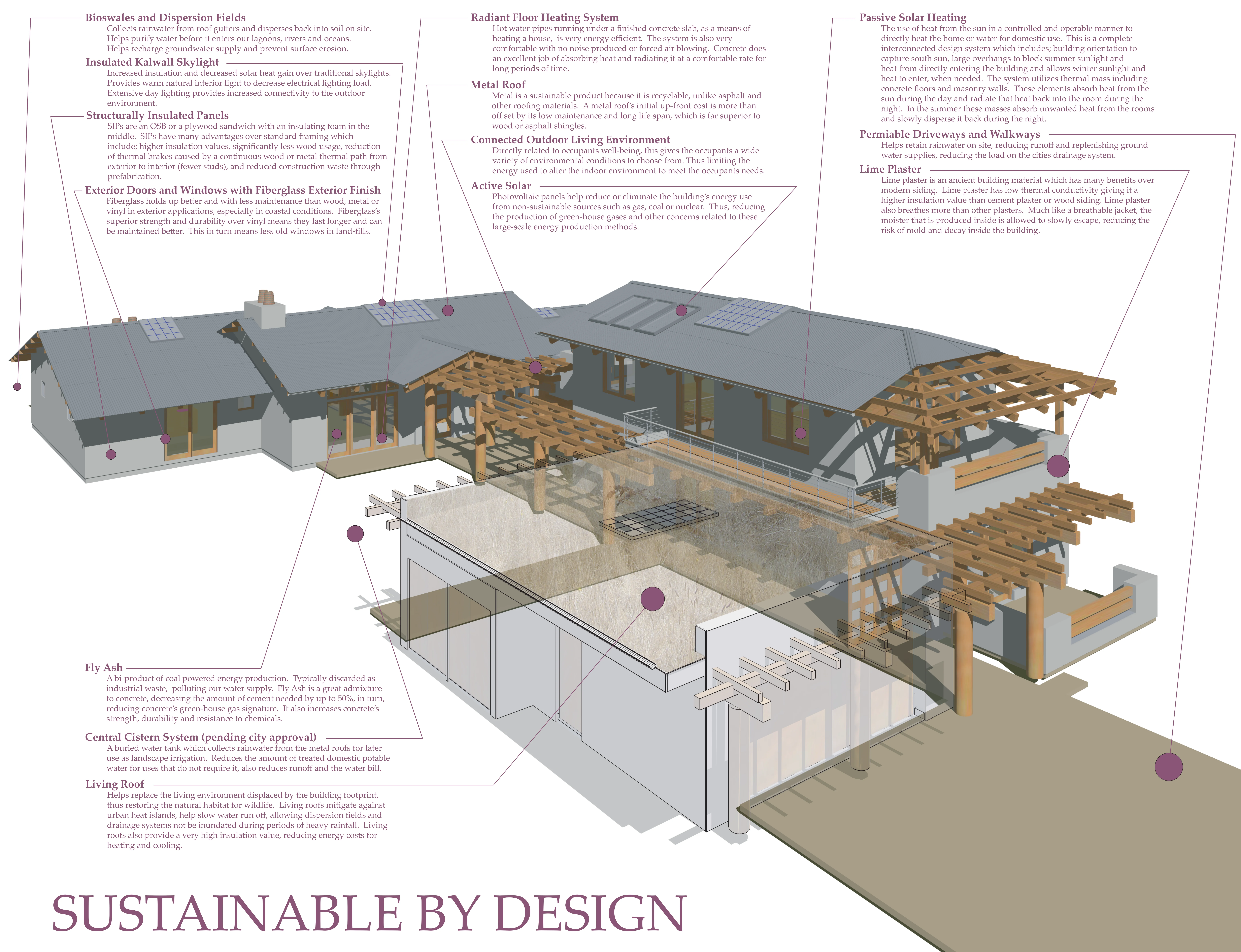
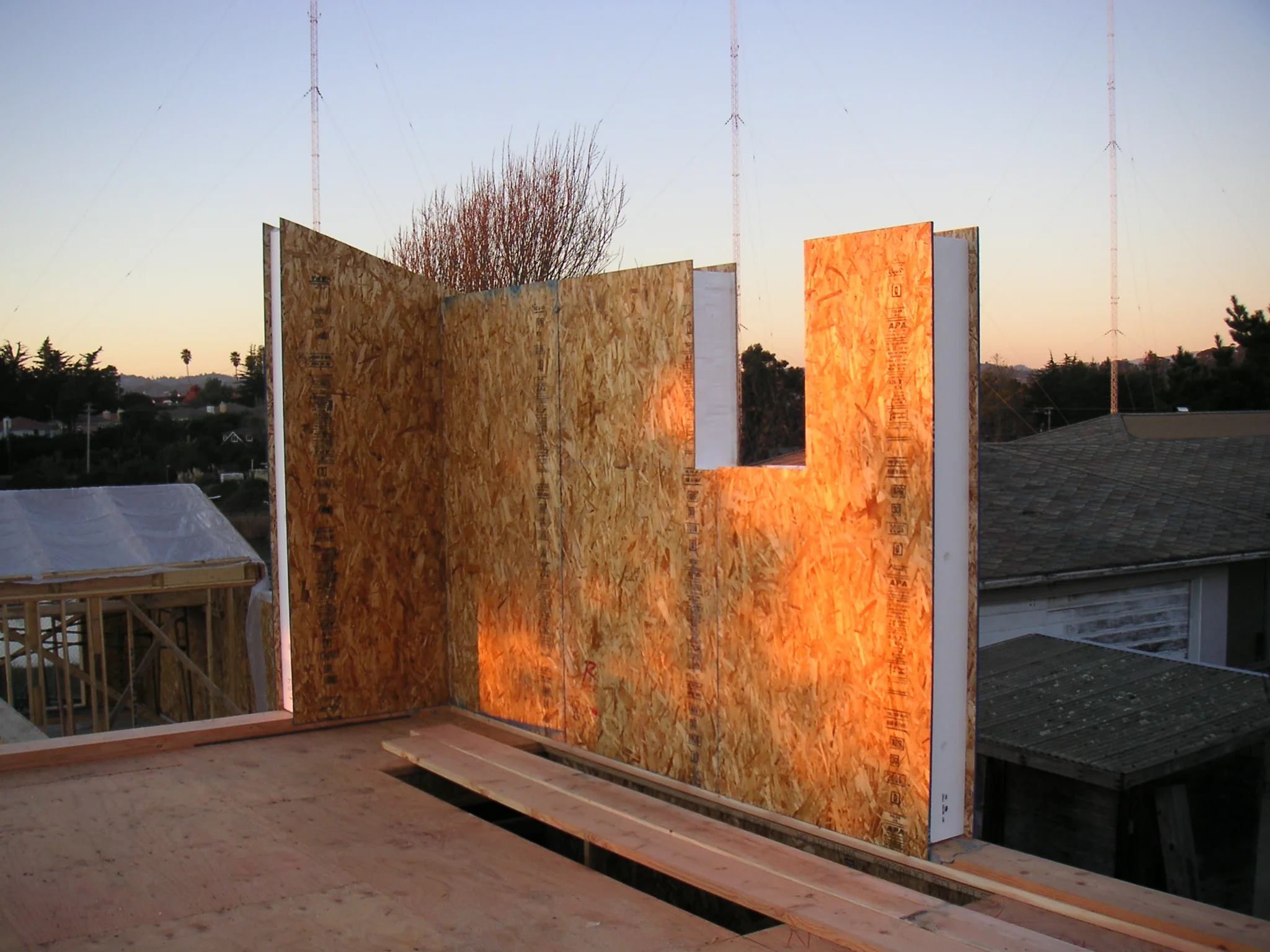
By investing upfront in robust, elemental materials—such as heavy-gauge Corten steel, Structurally Insulated Panels (SIPs), and integral-color exterior plaster—owners bypass the relentless, expensive cycle of repainting, rot repair, and siding replacement. While these materials carry a higher initial premium, their virtually zero-maintenance lifecycle makes them the most financially sound choice for a legacy property.
The ROI of High-Performance Systems
To understand the return on investment (ROI) of sustainable architecture, we can look to our recent residential work on the Sun House. Rather than treating energy efficiency as an afterthought, the home was engineered from the ground up as a net-positive thermal battery. This required a deliberate, upfront investment into highly specific, integrated technologies: advanced photovoltaic solar arrays, ultra-efficient CO₂ heat pump water heaters, and a whole-home hydronic radiant floor system.
The brilliance of these systems lies in their interaction. During the day, the solar arrays generate clean electricity to power the heat pump, which quietly produces high-temperature water. This thermal energy is stored and then circulated through the radiant floors to heat the home entirely off-grid. By investing in these high-performance systems and a heavily insulated envelope, the Sun House achieves Net-Positive status—meaning it generates more energy than it consumes, resulting in a profound reduction in the daily cost of living.
Certified Performance: The LEED Standard
Our commitment to high-performance architecture is not merely theoretical; it is externally verified. Led by Daniel Barker, a LEED Accredited Professional (LEED AP), our studio successfully translates these rigorous sustainable principles from custom residential homes to massive institutional campuses.
Achieving stringent third-party certifications requires an uncompromising, holistic approach to site ecology, water efficiency, and indoor environmental quality. Our studio's ability to execute at this elite tier is demonstrated by the LEED Gold certification awarded to our 35,000-square-foot Saint Joseph's Priory, as well as the LEED Silver designations achieved at the Villa Siena campus and our 20th Street commercial development. These credentials prove to commercial developers and institutional boards that our sustainable strategies yield measurable, world-class results.
Future-Proofing the Investment
Beyond daily operational savings, sustainable architecture is a proactive defense against evolving regulations and shifting market demands. As California continues to tighten its Title 24 energy codes and mandate the transition toward full electrification, buildings constructed to merely meet today's minimum standard will quickly become obsolete and less desirable.
Conversely, a sustainably designed, net-positive structure is inherently future-proofed. It provides energy security against an unstable grid and protects the owner from volatile utility rates. Should the time come to sell or lease, properties with independent, resilient energy systems and zero-maintenance envelopes consistently command a premium in the California real estate market, ensuring the upfront commitment to sustainability yields a massive final return.