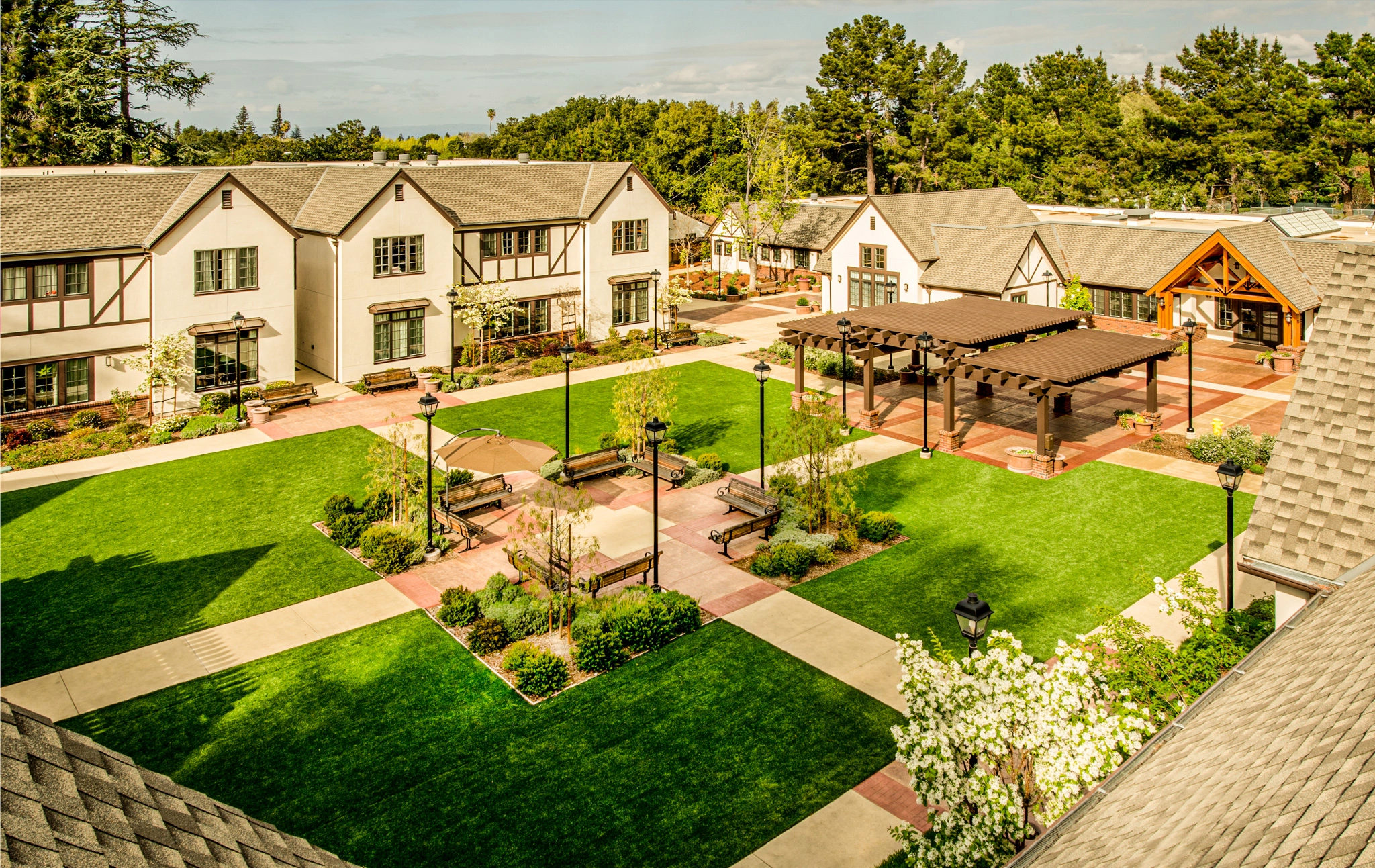
Healing Environments: Designing for Memory Care
Designing for memory care and assisted living represents one of the most rigorous disciplines in architecture. It requires mastering dual, often competing mandates: absolute adherence to highly technical life-safety codes, and the creation of a deeply compassionate, dignified environment that feels like a home, not an institution. In standard healthcare design, the clinical function of the building is often glaringly obvious. However, in memory care, the architecture itself must act as a passive, calming caregiver, requiring the clinical infrastructure to become entirely invisible.
The Invisible Institution: Navigating HCAI
In California, senior care facilities are strictly regulated by HCAI (formerly OSHPD), demanding intense structural, mechanical, and accessibility tolerances. From seamless zero-step thresholds and widened corridors to specialized HVAC filtration, every millimeter of the floor plan is scrutinized for infection control and life safety.
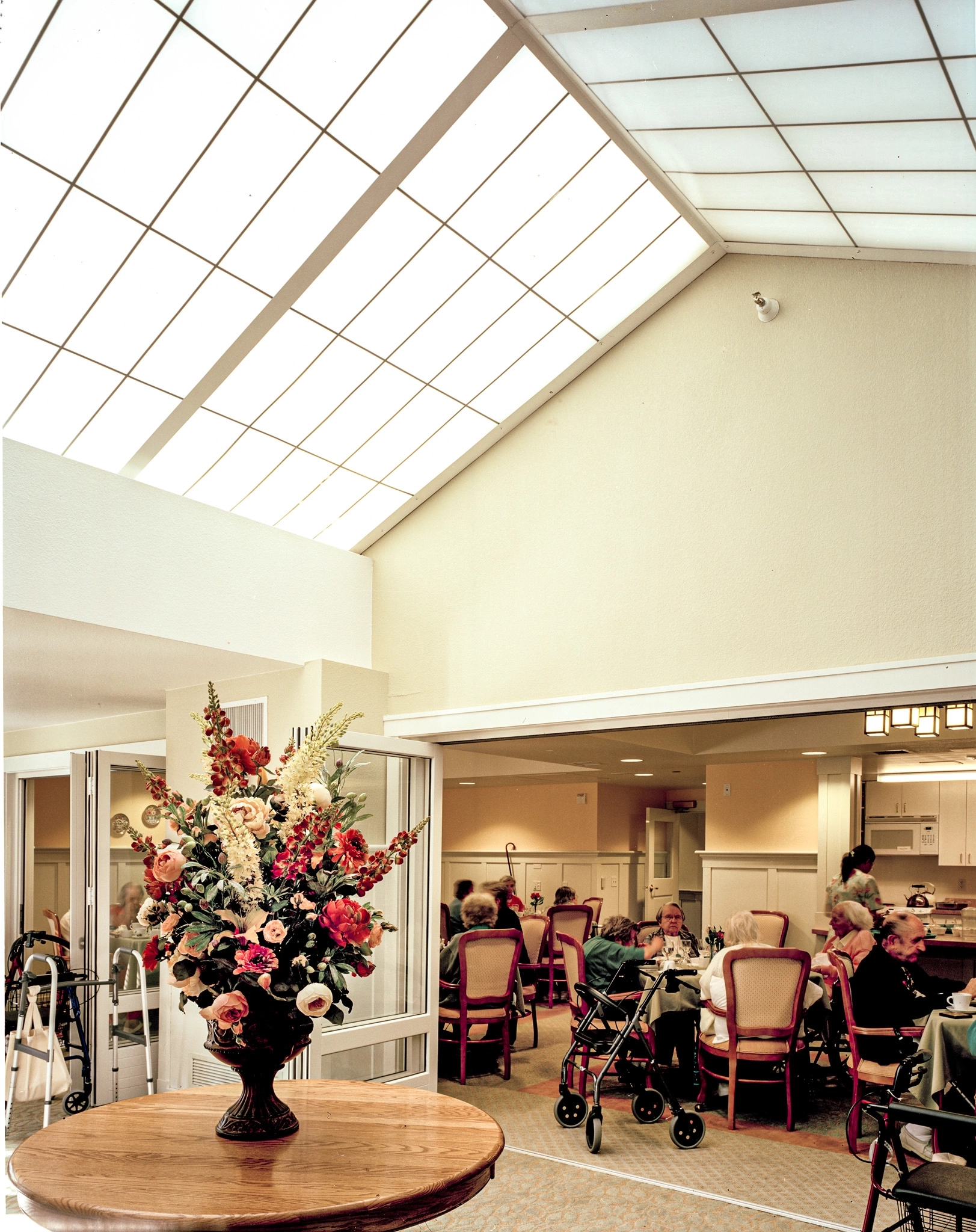
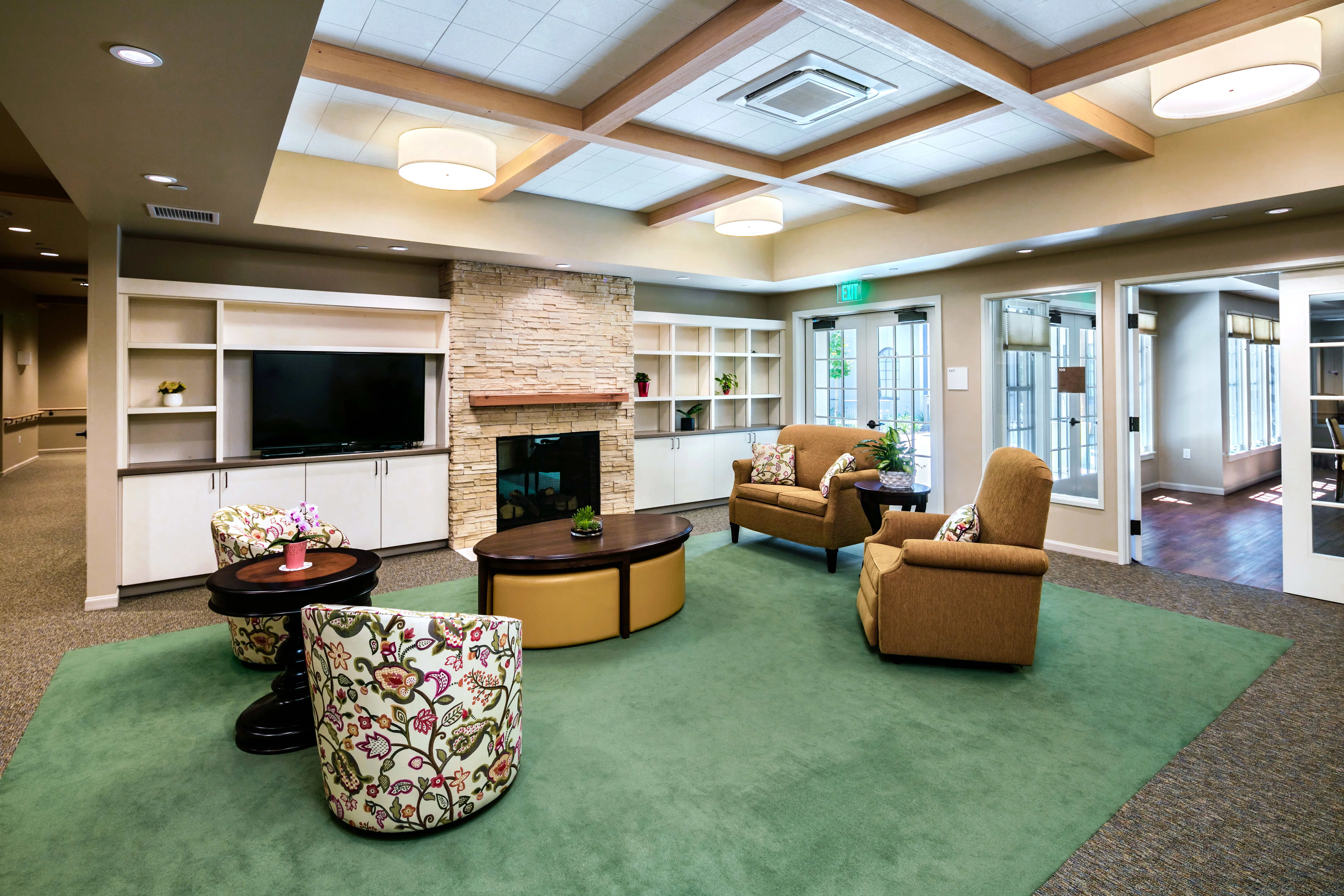
The true measure of success in this sector is when these complex clinical requirements disappear entirely from the occupant's awareness. We achieve this by aggressively sourcing architectural finishes that perform at a commercial, healthcare-grade level but possess the warmth and texture of residential design. By integrating concealed structural blocking for future grab bars, specifying impact-resistant wainscoting that mimics traditional millwork, and utilizing acoustic ceiling treatments that look like standard drywall, we strip away the sterile, clinical aesthetic that often triggers institutional anxiety.
The Psychology of Circulation
For residents experiencing Alzheimer’s and other forms of dementia, spatial friction can induce profound stress. Traditional hospital layouts—characterized by long, linear hallways that terminate in dead ends—are incredibly disorienting. When a memory care resident reaches a dead end, it frequently triggers confusion, frustration, and a feeling of being trapped.
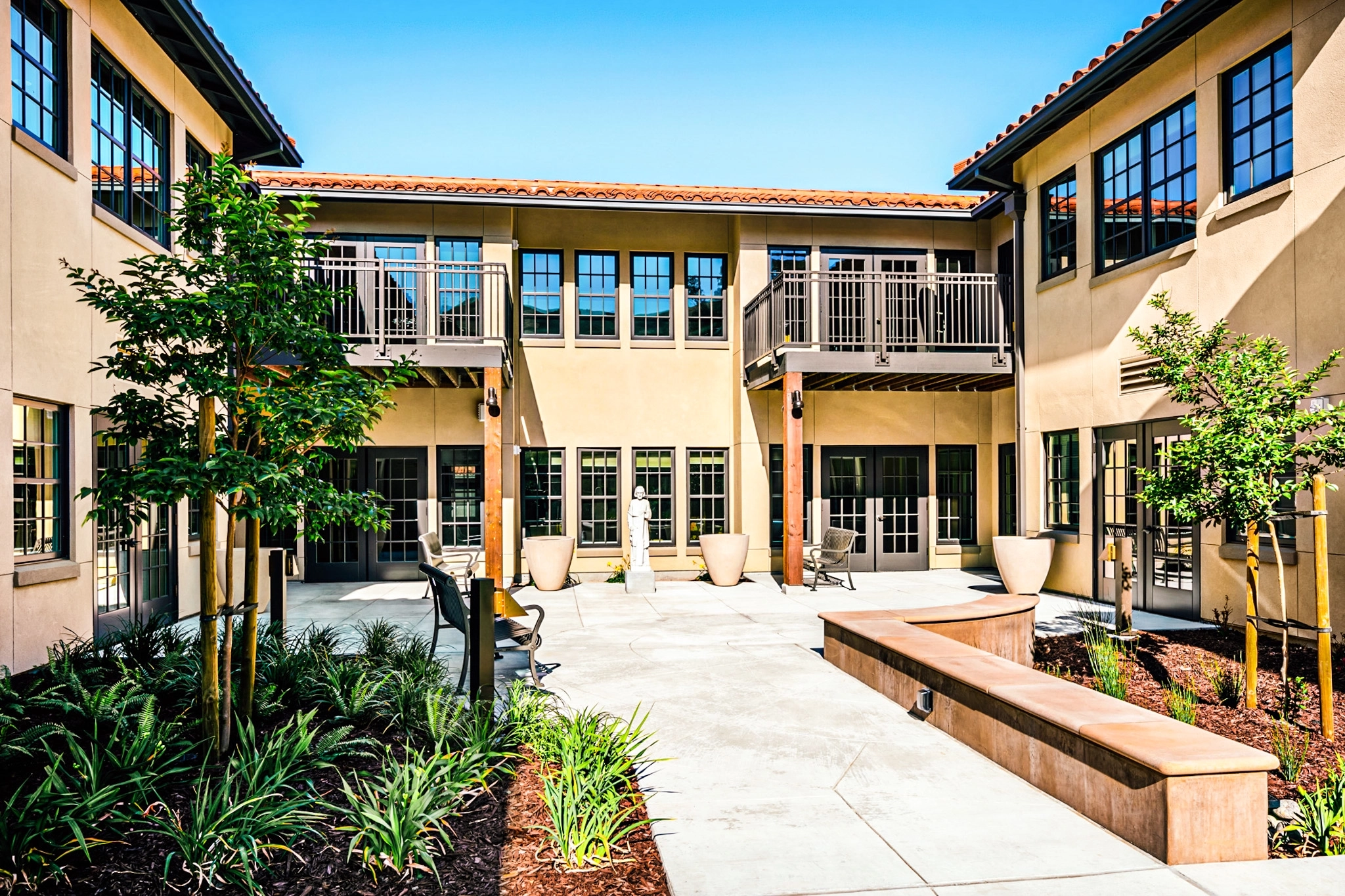
Our work on the Our Lady of Fatima expansion exemplifies our solution to this behavioral challenge. We replaced confusing corridors with continuous, circular walking paths. These "wandering loops" allow residents to safely and independently walk without ever encountering a hard stop. By choreographing these paths to gently guide residents past engaging communal hubs, dining areas, and visual landmarks, the architecture naturally encourages safe physical activity and social interaction.
Biophilia and Sensory Landscapes
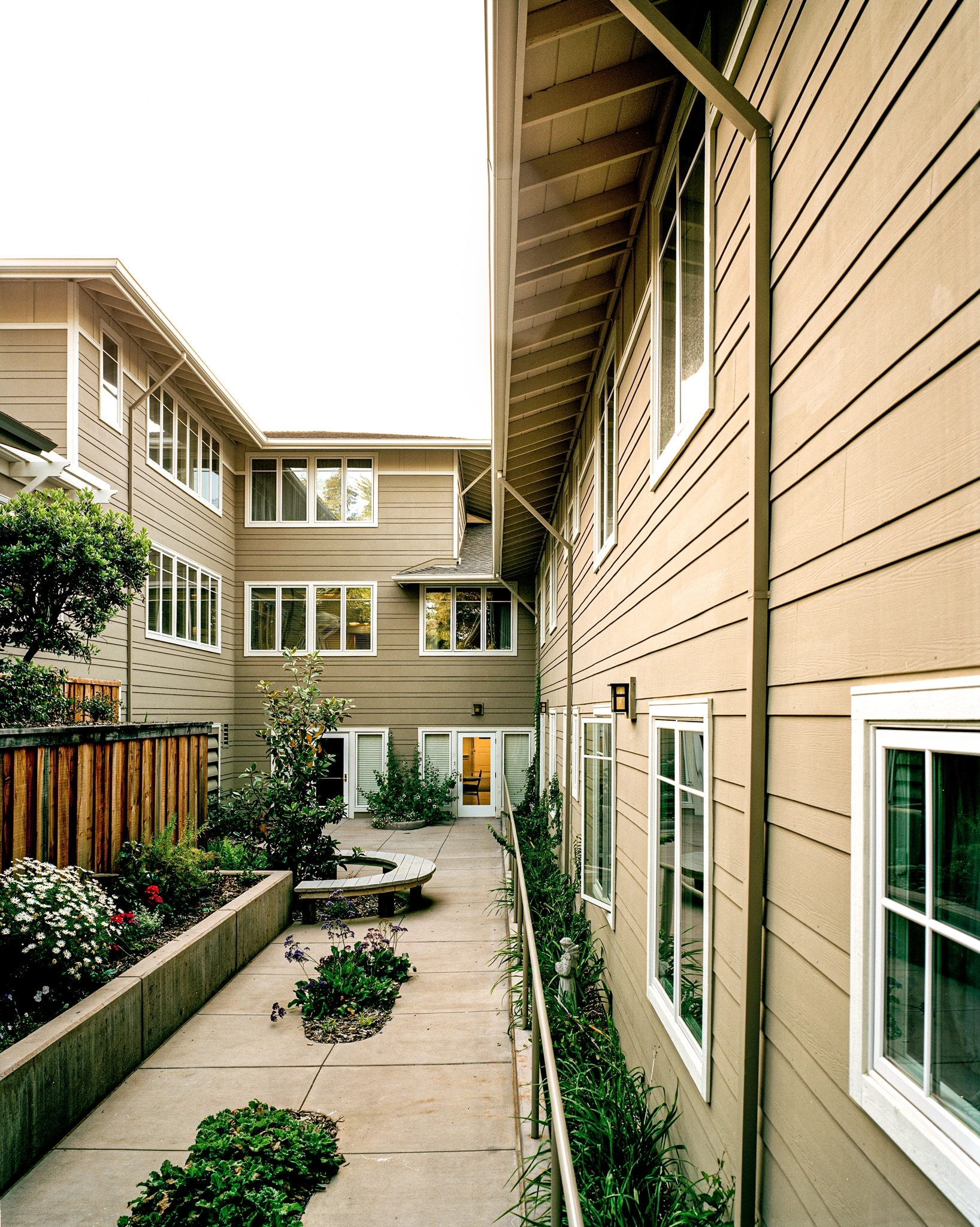
Central to our design philosophy is the integration of the outdoors as a clinical tool. At Our Lady of Fatima, the core of the wandering path surrounds a secure, internal Alzheimer's Garden. This is not merely an aesthetic backdrop; it is heavily programmed sensory therapy.
The landscape architecture utilizes tactile, non-toxic, and aromatic plantings that provide positive neurological stimulation without overwhelming the senses. Because memory is strongly tied to scent and touch, interacting with the garden can trigger positive emotional recall and provide a profound sense of grounding. Furthermore, by heavily integrating nature into the core of the building, the boundary between indoors and outdoors dissolves.
Regulating the Circadian Rhythm
One of the most disruptive symptoms of cognitive decline is "sundowning"—a state of increased agitation and confusion that occurs in the late afternoon and evening as lighting transitions. The most effective architectural defense against this is the aggressive management of natural and artificial light.
By carving large light courts into our institutional facilities and flooding communal dining and activity hubs with abundant natural daylight, the architecture naturally reinforces the residents' circadian rhythms. As the sun sets, automated, color-tuned artificial lighting systems take over, gradually shifting to warmer hues that signal the brain it is time to rest. Through the deliberate orchestration of light, space, and nature, we create calming, stabilizing sanctuaries that actively support the highest quality of life for their residents.